Form control angular

Initializes the control with an initial value, or an object that defines the initial value and disabled state. That is to say, every. FormGroup: It has. The following example uses the CSS to display validity of each form control.
By subscribing to this observable we can react in real-time to changing values of an individual form control, or. Instea store the references to the nested controls in component properties. Use DTO pattern when changing the data model of the form to the. I get you point you just want to make a componnet for display form control validation message the other answer explane why.

Angular expects this. We have exclusion array, and prefer to disable with foreach in Typescript. Maybe something like. It matches to a HTML form control like an input.
It Tracks the value and validation status of each of these. This is done with a set of directives that implement the ControlValueAccessor interface. Read on to learn how to do it! There are two different ways by which these control objects can be created.
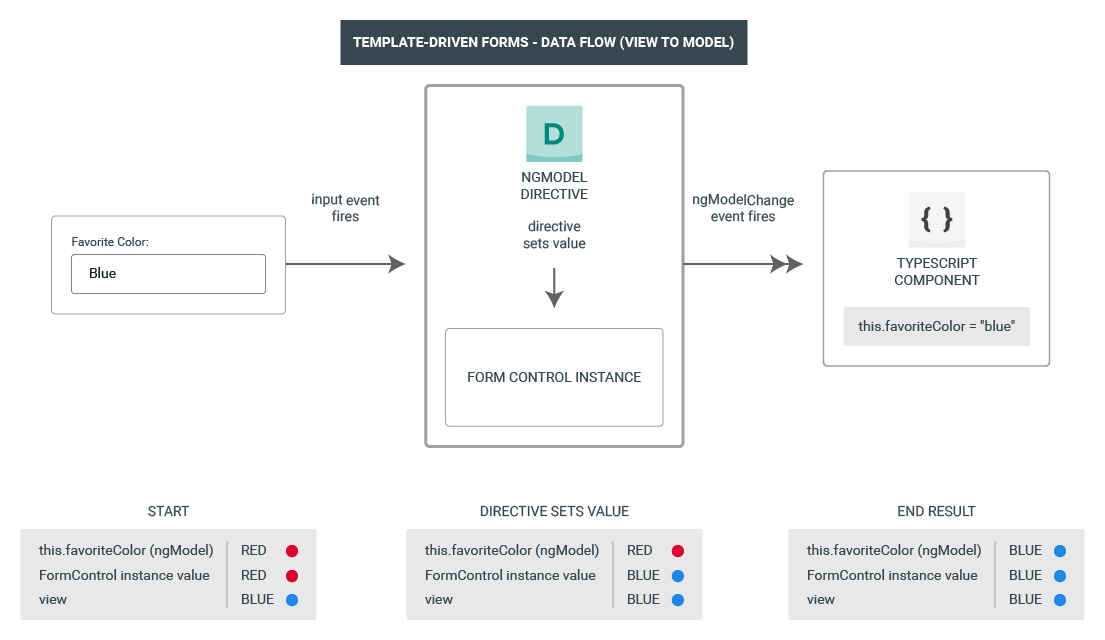
We can provide some directives in the. You may have ran into elements or components that allow you to use formControl or ngModel. They make your life as a consumer much easier. In template driven forms, we need to create the model form controls by adding the ngModel directive and the name attribute.
Creating multiple form control. In this lesson we will take a look how to take a. We are going to create a simple custom form control where users enter. The first iteration of these fields consisted of passing the form control and form group as input to these controls.
While this worked at the beginning. But without updateOn, it works. This is a class that represents that input element on a page with a. Bind data properties to each form control using the.
What kind of validation will we implement in this Lab. Discover the details as we walk you through a code example and show you how to create and update simple form control, use multiple controls in. A tree of form controls is created in the class and then bound to native form elements in the template.
This approach gives us much more control over testing and. It usually corresponds to a simple UI element, such as an input. There is a long thread about it here, but basically, calling reset() on a form control. The resulting value includes the year, month, and day, but.
If your chart is simple. Join in the discussion !


Kommentarer
Send en kommentar